

Romeo and Juliet
Kisses only. Any sex is implied and fully off page.
Closed door. No anatomical or crude language.
Estimated from the blurb · 0 reader votes
Tropes
Content warnings
Blurb
Romeo and Juliet is a tragedy written by William Shakespeare early in his career about two young star-crossed lovers whose deaths ultimately reconcile their feuding families. It was among Shakespeare's most popular plays during his lifetime and, along with Hamlet, is one of his most frequently performed plays. Today, the title characters are regarded as archetypal young lovers.Romeo and Juliet belong to a tradition of tragic romances stretching back to antiquity. The plot is based on an Italian tale translated into verse as The Tragical History of Romeus and Juliet by Arthur Brooke in 1562 and retold in prose in Palace of Pleasure by William Painter in 1567. Shakespeare borrowed heavily from both but expanded the plot by developing a number of supporting characters, particularly Mercutio and Paris. Believed to have been written between 1591 and 1595, the play was first published in a quarto version in 1597. The text of the first quarto version was of poor quality, however, and later editions corrected the text to conform more closely with Shakespeare's original.Shakespeare's use of his poetic dramatic structure (especially effects such as switching between comedy and tragedy to heighten tension, his expansion of minor characters, and his use of sub-plots to embellish the story) has been praised as an early sign of his dramatic skill. The play ascribes different poetic forms to different characters, sometimes changing the form as the character develops. Romeo, for example, grows more adept at the sonnet over the course of the play.Romeo and Juliet have been adapted numerous times for stage, film, musical, and opera venues. During the English Restoration, it was revived and heavily revised by William Davenant. David Garrick's 18th-century version also modified several scenes, removing material then considered indecent, and Georg Benda's Romeo und Julie omitted much of the action and used a happy ending. Performances in the 19th century, including Charlotte Cushman's, restored the original text and focused on greater realism. John Gielgud's 1935 version kept very close to Shakespeare's text and used Elizabethan costumes and staging to enhance the drama. In the 20th and into the 21st century, the play has been adapted in versions as diverse as George Cukor's 1936 film Romeo and Juliet, Franco Zeffirelli's 1968 version Romeo and Juliet, and Baz Luhrmann's 1996 MTV-inspired Romeo + Juliet.
Read it? Rate it
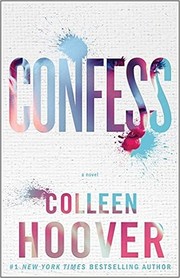
Confess
Same forbidden pull and instant obsession between doomed-feeling young lovers, but contemporary, sexually explicit, and it ends happily instead of in the tomb.

Troilus and Cressida
Another Shakespeare tragedy of doomed lovers divided by warring sides, but cynical and bitter rather than tender, with betrayal instead of devotion.

The Selection Stories
Keeps the chaste, sighing first-love intensity and forbidden romance across class lines, but trades tragedy for palace intrigue and a hopeful ending.
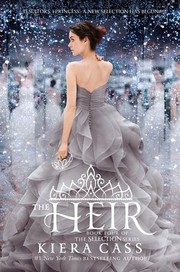
The Heir (The Selection #4)
Forbidden love against family duty and rank, with the same feverish teenage longing, though lighter, rivalry-driven, and safely resolved.
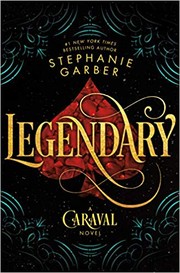
Legendary
Feuding powers, an arranged match, and a lover you shouldn't want, but slower burn, dreamlike fantasy, and survivable stakes.
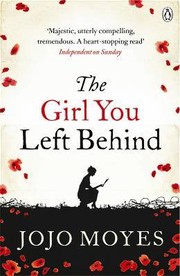
The Girl You Left Behind
Same forbidden love torn apart by feuding forces and loss, but prose historical fiction with adult heroines and a hopeful, less fatal ending.