
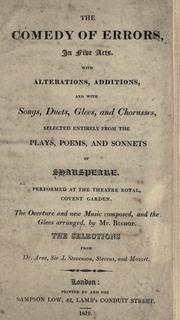
The Comedy of Errors
No romance or no physical intimacy at all.
Closed door. No anatomical or crude language.
Estimated from the blurb · 0 reader votes
Tropes
None listed yet.
Content warnings
None listed. Readers can add them below.
Blurb
The Comedy of Errors is one of William Shakespeare's early plays. It is his shortest and one of his most farcical comedies, with a major part of the humour coming from slapstick and mistaken identity, in addition to puns and word play. The Comedy of Errors is, along with The Tempest, one of only two Shakespeare plays to observe the Aristotelian principle of unity of time--that is, that the events of a play should occur over 24 hours. It has been adapted for opera, stage, screen and musical theatre numerous times worldwide. In the centuries following its premiere, the play's title has entered the popular English lexicon as an idiom for "an event or series of events made ridiculous by the number of errors that were made throughout". Set in the Greek city of Ephesus, The Comedy of Errors tells the story of two sets of identical twins who were accidentally separated at birth. Antipholus of Syracuse and his servant, Dromio of Syracuse, arrive in Ephesus, which turns out to be the home of their twin brothers, Antipholus of Ephesus and his servant, Dromio of Ephesus. When the Syracusans encounter the friends and families of their twins, a series of wild mishaps based on mistaken identities lead to wrongful beatings, a near-seduction, the arrest of Antipholus of Ephesus, and false accusations of infidelity, theft, madness, and demonic possession.
Read it? Rate it

Romeo and Juliet
Winter's Tale

We'll Always Have Summer
Mistaken feelings instead of mistaken identities, with tangled love triangles among near-family; modern, earnest and romantic rather than farcical.
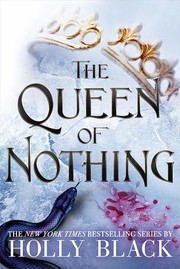
The Queen of Nothing
Keeps the scheming, disguise and court intrigue energy, but swaps slapstick comedy for darker fae violence and a slow-burn romance.

My True Love Gave to Me
Short, self-contained episodes with reunions and coincidence, like the play's brisk unity of time, but sweet and sentimental rather than farcical.

The Selection Stories
Rivalry, hidden identities and courtly misunderstandings drive it, though the tone is earnest romantic drama instead of comic chaos.