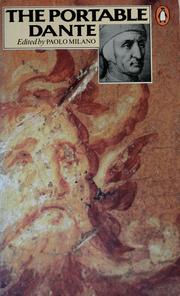

The divine comedy of Dante Alighieri
Not yet rated.
Not yet rated.
Not yet rated
Tropes
None listed yet.
Content warnings
None listed yet. Readers can add them below.
Blurb
The Divine Comedy: Inferno begins on the night before Good Friday in the year 1300, "halfway along our life's path" (Nel mezzo del cammin di nostra vita). Dante is thirty-five years old, half of the biblical lifespan of 70 (Psalms 89:10, Vulgate), lost in a dark wood (understood as sin), [16][17][18] assailed by beasts (a lion, a leopard, and a she-wolf) he cannot evade and unable to find the "straight way" (diritta via) - also translatable as "right way" - to salvation (symbolized by the sun behind the mountain). Conscious that he is ruining himself and that he is falling into a "low place" (basso loco) where the sun is silent ('l sol tace), Dante is at last rescued by Virgil, and the two of them begin their journey to the underworld. Each sin's punishment in Inferno is a contrapasso, a symbolic instance of poetic justice; for example, in Canto XX, fortune-tellers and soothsayers must walk with their heads on backwards, unable to see what is ahead, because that was what they had tried to do in life: they had their faces twisted toward their haunches and found it necessary to walk backward, because they could not see ahead of them. ... and since he wanted so to see ahead, he looks behind and walks a backward path.[19] Allegorically, the Inferno represents the Christian soul seeing sin for what it really is, and the three beasts represent three types of sin: the self-indulgent, the violent, and the malicious. These three types of sin also provide the three main divisions of Dante's Hell: Upper Hell, outside the city of Dis, for the four sins of indulgence (lust, gluttony, avarice, anger); Circle 7 for the sins of violence; and Circles 8 and 9 for the sins of fraud and treachery.