Why the North won the Civil War
No romance or no physical intimacy at all.
Closed door. No anatomical or crude language.
Estimated from the blurb · 0 reader votes
Tropes
None listed yet.
Content warnings
Blurb
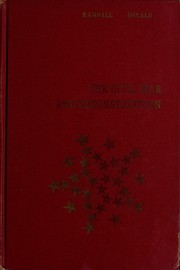
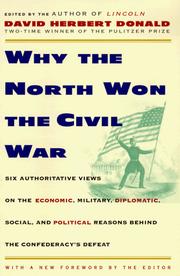
''Why the North Won the Civil War'' is a classic historical anthology edited by two-time Pulitzer Prize-winner David Herbert Donald. Originally published in 1960, the book compiles insightful chapters from prominent American historians who analyze the conflict through economic, military, diplomatic, social, and political lenses. The book is highly regarded for moving beyond simple answers (like just counting factory outputs or troop numbers). Each contributor addresses a specific dimension of the Confederacy’s failure and the Union’s ultimate triumph. Economic Factors (Richard N. Current): Current contrasts the North’s massive industrial capability with the South's agrarian economy. He demonstrates how the North's economic superiority allowed it to sustain a long, total war, while Southern civilian and economic resources quickly dissipated. Military Strategy (T. Harry Williams): Williams critiques the deficiencies of Southern military strategy. He evaluates how both sides were influenced by the 19th-century strategist Baron Jomini (who favored rapid tactical offensives and position warfare) and argues the North adapted its strategic leadership more effectively over time. Diplomacy (Norman A. Graebner): Graebner explains why European powers, specifically England and France, ultimately refused to intervene on behalf of the South. He notes that doing so would have violated their geopolitical commitments to non-intervention, leaving the South completely isolated. Social & Cultural Factors (David Herbert Donald): Donald argues that the South failed to enforce strict military discipline enough to run an efficient war machine. Political Leadership (David M. Potter): Potter focuses on the political incompetence of the South. He emphasizes that the South lacked a well-organized, stable two-party political system. Without an opposition party to push the government toward accountability, President Jefferson Davis's leadership flaws went unchecked.